The car keeps a diary
TeslaMate is an open-source logger for Teslas. It’s the oldest service in our home lab, running on a few containers since January, and the data never leaves the house.
What it does
- Logs every drive: route, distance, energy used and efficiency.
- Logs every charge: where, how fast, how much energy, at what cost.
- Measures phantom drain: how much the car uses just sitting parked.
- Tracks battery health: the slow degradation curve, over months.
- Knows where the car is: home, away, parked, driving, sleeping.
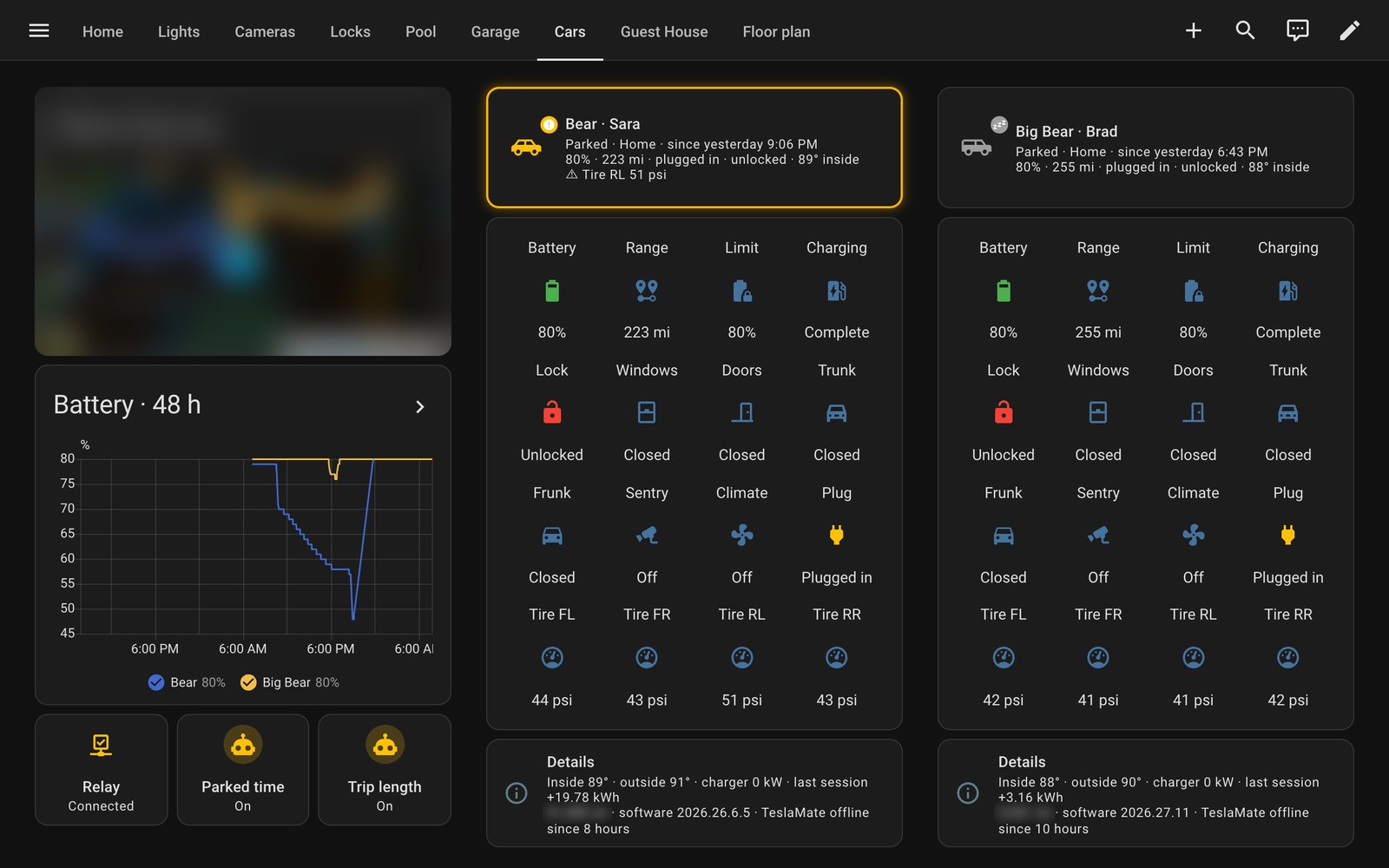
- Feeds Home Assistant live: charge level, range, locks, doors, climate and tire pressure, for both cars, as ordinary sensors.
- Survives a car swap: point it at the new car and the diary continues.
What it looks like at home
The Cars tab on the kitchen tablet is built entirely from TeslaMate’s live feed:
Why self-host it
The data is ours, it lives here, and it gets more useful the longer it runs. A year of driving history in our own database beats the app’s current-month view, and it costs nothing but a few containers.